
Last year Brandi Williams wrote a guest post about her journey from hospitality into counseling. Since then, she has continued that journey in remarkable ways. She has changed jobs, begun seeing clients full time, and become a uniting presence in our cohort. Watching Brandi step into that work with clarity and care has been inspiring. She brings thoughtfulness to conversation, and she has a way of making complex motivations feel accessible without shrinking their weight. I admire how she holds her values alongside the real demands of life.
In this follow-up interview, I asked Brandi to reflect on how the last year has shaped her identity, her practice, and her sense of purpose. Her answers offer insight into the inner shifts that support sustainable, values-aligned work. Here is what she shared.
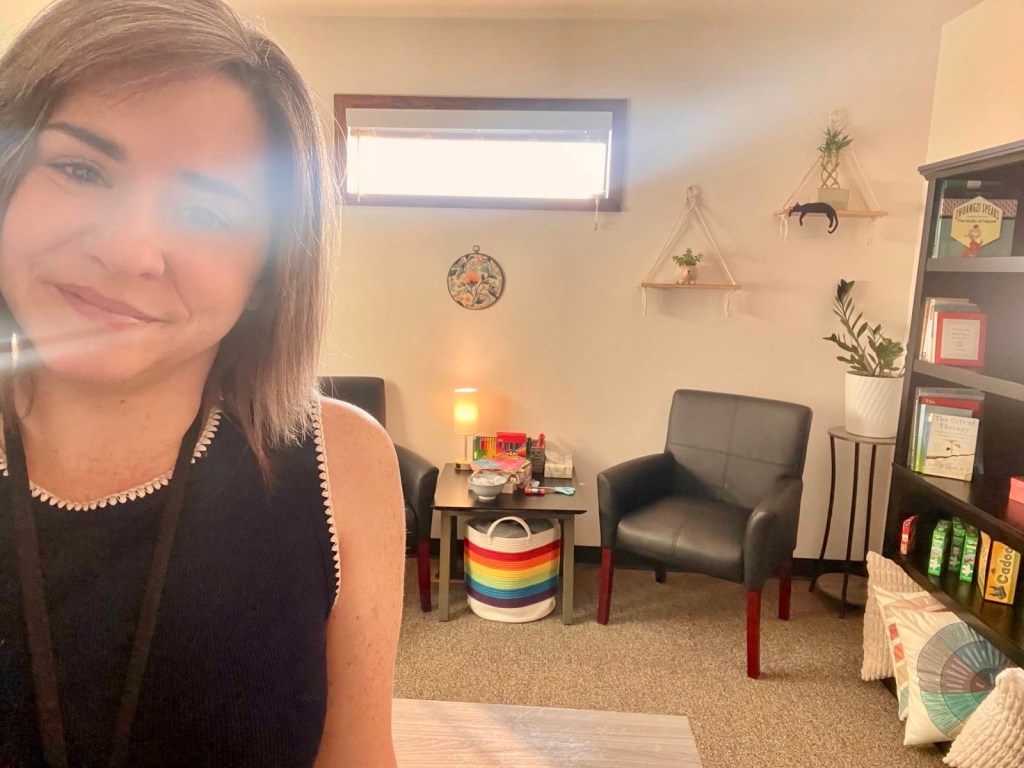
RN: Now that you are seeing clients full-time, what early lessons from training at Palo Alto University have shown up most in your day-to-day work?
Brandi: Oh gosh, so many things! Honestly, every single session seems to pull forward a lesson I’ve learned along the way. On one hand, I’m grateful for the sheer amount of information we’ve been provided, resources, theories, and practical tools that I can draw on when I need them. But on a deeper level, I’m even more thankful for the mentorship and guidance from faculty. Their wisdom shows up in ways I didn’t always expect. Some lessons don’t land right away. Often, a client will bring something up, and I’m transported back to a classroom moment, thinking, “Ohhh, that’s how this was applicable!” It’s encouraging to realize how much of that knowledge sits in the background, ready to surface when it’s needed most.
The main things I try to carry with me into every session are simple: trust the counseling skills I’ve built, be fully present and attuned with my clients, and commit to being a lifelong learner. Because the truth is, counseling isn’t about having all the answers, right? It’s about showing up, staying curious, and allowing the lessons to keep unfolding.
RN: Have your clinical interests or preferred population changed in the last year? Where do you feel drawn at this point?
Brandi: Yes…and no. My path to becoming a counselor has always been rooted in a strong sense of advocacy, especially for marginalized folks, LGBTQIA+ youth in particular. Living in a rural area, I’ve seen how tough things can be. The laws are becoming more and more draconian, and the community itself can feel fractured. When I first started in the counseling program, I realized that working with kids and teens was an area of growth for me. Honestly? It terrified me. So, I leaned toward adults instead, exploring work with incarcerated populations, specifically perpetrators of domestic violence.
But once I started at the agency, I decided to lean into that discomfort and work with clients across all age groups. I won’t lie, it was nerve-wracking to see young people on my caseload in the beginning. But as soon as I began meeting them, I was pleasantly surprised at how natural it felt, especially working with young queer clients. In that way, my original passion has been affirmed, even as I continue to seek out additional training. Looking forward, I want to keep growing. I’d love to help build community support networks for LGBTQIA+ youth, because therapy is just one piece of the puzzle, and there’s such a huge need right now. Add to that the rampant issue of sexual violence and the lack of resources available, and most days, I can’t help but wish there were more hours in the day.
RN: How has your understanding of this profession evolved since you began the program?
Brandi: I’ve become increasingly aware of how important it is as a counselor to work on myself, not just through training, but through inner work. It didn’t take long for me to decide to seek out my own counseling again and look inside so I can show up better for my clients. In the beginning, I thought I just need to educate myself and build a network of contacts and resources, but that’s the easy part. It’s so important to build a strong sense of myself to show up the way I want to, and of course, that requires the help of others. I’m lucky to have a great practicum supervisor who I trust and understands me to provide guidance. It cannot be overstated that the advice we’ve been given in this program about the importance of supervision, creating a care plan, and leaning on each other is true!
RN: In your blog post last year, you described transitioning from hospitality into counseling and shared that at one point you felt unworthy of pursuing it. How has that internal narrative shifted, and what practices or supports helped you move forward?
Brandi: I wish I could say those thoughts didn’t still come up for me, but they do, and that’s part of the work I do for myself. But! I also cannot say how much I absolutely love working with clients. At the risk of sounding cheesy, it is just so cool. The honor of being witness to another person’s growth is astounding, and truly humbling. I feel so lucky to be able to do this work. I know not everyone gets the chance to find a career that’s sustainable and deeply fulfilling. For me, doing my own inner work fuels my ability to show up for clients in the way that I want. I’m also constantly inspired by the people around me, from instructors to mental health creators I follow online, but perhaps most of all, by the incredible people in our cohort. I learn so much from their insights in class, and especially in the limited time we spend together, their support and perspective fills me up. It’s such a gift to be surrounded by some of the most thoughtful, passionate, and genuinely cool people I’ve ever met.
RN: What does supervision look like for you now, and how has that relationship supported your growth or challenged your assumptions?
Brandi: My supervision setup looks a little different than what I imagine many people in our program experience. Since I’m completing my practicum at my job, I have a work supervisor and a practicum supervisor within the agency. Honestly, it’s been a huge gift because it means extra layers of support. With my work supervisor, I meet every other week to go over clients, documentation, and the nuts and bolts of the job. On top of that, we have weekly group supervision with all the clinicians, which has been invaluable. We bounce around ideas, share resources, and just support one another through the work. And now that I’ve started meeting with my practicum supervisor, I have someone who’s there not only to guide me with client work but also to support me as a developing counselor. Between them, I’m able to get answers to all the practical questions, logistics, confidentiality, treatment planning, but also the deeper, reflective guidance I need. I’ve come to appreciate just how powerful good supervision can be for growth, and I feel genuinely grateful to have it.
RN: Looking ahead, what goals or aspirations do you have for your work as a counselor?
Brandi: I really love working in community health, it’s always been where I saw myself working, and it’s great. However, I’ve also become aware of how effective specialization can be. I hope to spend practicum narrowing down exactly what that looks like for me and working toward it. I’m very mindful of burnout, and I want to do everything I can to mitigate that as well. Luckily, there are just so many different things I’m interested in expanding my knowledge on, so even if I tire of one arena, there are many avenues to pursue. Right now, my hope is to find a way to expand available resources for the LGBTQIA+ community in my area.
RN: Finally, what advice would you give to students who are just entering the program?
Brandi: Be patient and take care of yourself. In the beginning, I spent so much time worrying about the end that I may not have fully appreciated the journey I was on. Looking back, I wish I had taken more time to savor the learning, the growth, and the connections along the way. Every challenge, every moment of doubt, and every lesson, in class, residency, and starting practicum, have shaped the counselor I am becoming.
The best thing I can say is to take it one step at a time. Lean into your cohort, because the insights, support, and perspectives they share are invaluable. Invest in your support system, both personally and professionally, and don’t shy away from doing your own inner work. It’s what allows you to show up fully for your clients. If you stay present, stay grounded, and embrace the process, you’ll not only gain the skills and knowledge you need, but you’ll also find joy and fulfillment along the way.
We thank you, Brandi, for this interview!
If you would like to receive my blog posts in your inbox, please enter your email address below.
I will see you next week.

 Roque Neto