
Last week, I shared the first post of this series: “Life as an act of Consumption.” That post considered how we risk going through life with a consumer mindset, treating ourselves, others, and the planet as disposable products. While working on that post, an image kept coming to mind: a huge mouth that swallows everything. It doesn’t search for food. It doesn’t chew. It passively gulps everything thrown its way. This image summarizes my view of the dangers of passive consumption.
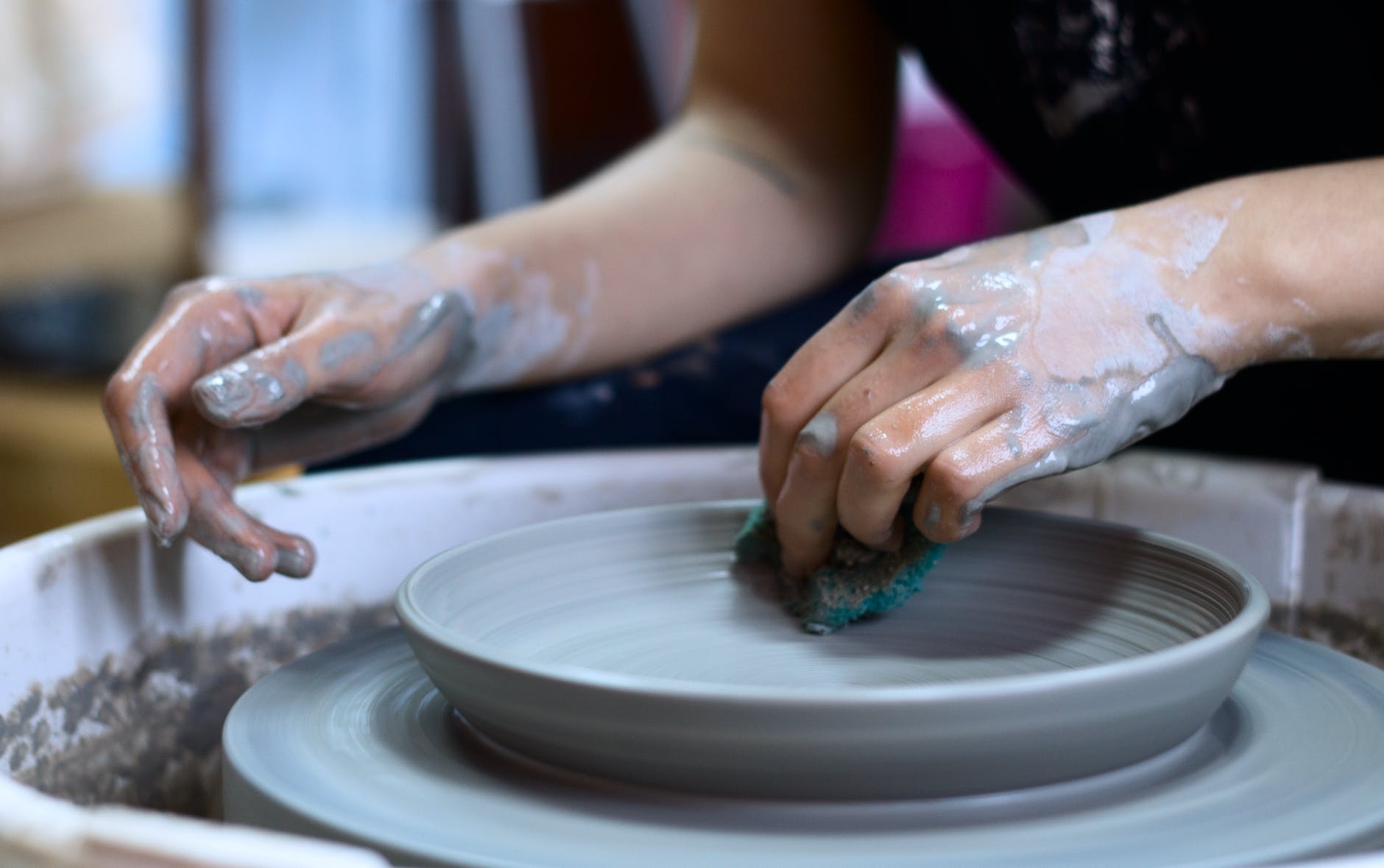
In the second post of this series, we are reflecting on an aspect of human nature that can help us counterbalance the prevalence of consumerism: the concept of “Homo faber.” This term points to humans as makers and represents an integral aspect of human nature: our drive to create, build, transform our environment, and use our creativity to overcome challenges. Philosophers, historians, and anthropologists have used this concept as a lens to understand our evolutionary journey and societal progress.
“Homo faber” symbolizes a core aspect of our identity, emphasizing the strength of human creativity and spirit of innovation. Reflecting on this, a therapist once told me that the most effective medicine for depression is action. By this, he was suggesting that I tapped into my inner resources and creativity to find solutions for the challenges I faced at that time, rather than letting myself feel depressed and paralyzed.
Tapping into our creative abilities nurtures our sense of agency and imagination. It encourages out-of-the-box thinking, which is essential in an era marked by complex challenges and too many notifications and distractions.
In an age of consumerism, embracing the “maker” ethos promotes self-reliance. When we create or adapt something we may feel a stronger sense of purpose and self-worth. These feelings may foster a proactive approach to challenges and the reduction of dependency.
Embracing the “Homo faber” dimension of our lives brings more than individual benefits. Our creations, whether they are tools, art, or monuments, are not just mere objects. They carry cultural and historical significance, telling stories of our communities, beliefs, and aspirations. Additionally, as concerns about environmental impact grow, the ability to craft and repurpose holds the key to more sustainable ways of living.
The pervasive influence of television, videos, and social media has shifted the balance for many from being creators to primarily being consumers. So much so, that we often hear parents mention how much time their children spend staring at a screen as opposed to playing with others in real life. To live life as an act of creation in the age of digital consumption, we can adopt several strategies:
1. Limit Passive Consumption: Be mindful of passive digital consumption, such as endless social media scrolling or binge-watching. Periodically disconnecting from digital devices can give people the space and time to engage in hands-on activities. Taking breaks from screens can help rekindle the desire to create.
2. Learn a New Skill: Use online platforms like YouTube, Coursera, and Udemy to learn something new. Be it playing a musical instrument, cooking, painting, or coding, you can learn a new skill and apply it in a tangible way.
3. Rediscover Traditional Crafts: Engage in activities like knitting, pottery, or painting. These crafts offer a tactile experience that can be grounding and satisfying. And traditional activities such as cooking and baking are also a fundamental act of creation. Experimenting with old and new recipes can be a fulfilling way to channel the “Homo faber” ethos.
4. Engage in Collaborative Projects: Engage with friends or community members in collaborative projects. It can be anything from community gardening to starting a podcast. Additionally, some communities have local maker spaces or workshops that offer tools and courses on everything from woodworking to 3D printing. Joining such spaces can provide hands-on experiences and connect individuals with a community of creators.
5. Journaling: Physical writing can be a form of creation. Journaling helps in expressing yourself and in documenting ideas, dreams, and projects. Journaling can also be combined with setting up goals. You can use it to outline your objectives for creative projects and document your progress. Having an end goal can motivate sustained effort.
6. Celebrate Small Achievements: No matter how small, every creation is an achievement. Celebrate these milestones to foster motivation.
By integrating these strategies, we can nurture our creative dimension, finding a balance between digital consumption and the human desire to create and innovate. This balance can lead to enhanced wellbeing, a sense of purpose, and greater satisfaction in our accomplishments.
While creating and adapting are powerful dimensions of the human experience, especially in a time when we might see ourselves as passive consumers (or a huge mouth that swallows everything), it is also important to consider a risk. When the potential for creation becomes a tool of the economic system, it can harm ourselves and the environment. Constant pressure, whether internal or external, to produce and innovate can lead to burnout and mental fatigue. And just like that, what was once pleasure becomes a destructive chore.
So, in considering our life as an act of creation, it is important to consider that the implications for this human dimension are multifaceted. They present challenges and opportunities for individual wellbeing and society at large. As in everything else, considerations of ethics and sustainability are crucial. When approached with these elements, the “Homo faber” ethos allows us to navigate challenges with creativity, resilience, and adaptability.
Until next time, when we will share the third post of this series: “Life as an Act of Will.”

 Roque Neto
[…] emphasizes our capacity for volition and choice. While we are also creatures of consumption and creation, our ability to will is fundamental to being […]
LikeLike
[…] the human condition, we have explored various dimensions of human nature: Homo economicus, Homo faber, and Homo volens. Today, we reflect on the importance of play, not just as a leisure activity, but […]
LikeLike