
Last year, my colleague Edelysse shared a powerful blog post about the experiences and values that brought her into the Clinical Mental Health Counseling program. She wrote with honesty about balancing motherhood, professional life, and a desire to help others through therapy. Since then, much has unfolded. Edelysse has grown both personally and professionally, and she remains actively involved as Secretary of our Chi Sigma Iota (CSI) chapter at Palo Alto University.
She was also one of the first in our cohort to secure a practicum and internship site. This is a process that many of us, including myself, are still navigating. As we prepare for this next stage in our training, I caught up with Edelysse to hear more about where she is now, what she has learned over the past year, and what she hopes to carry with her into this new chapter.
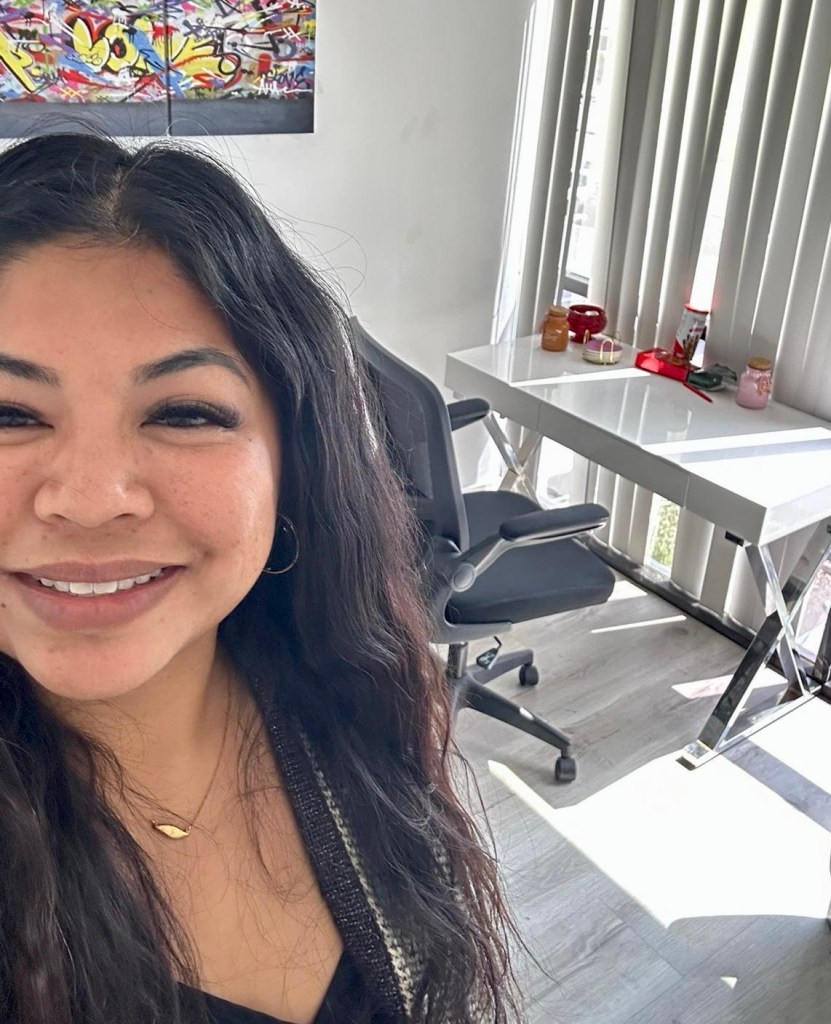
RN: How has your understanding of this profession evolved since you began the program?
Edelysse: My view of the Counseling field has changed tremendously. I’ve learned that there is a huge difference between being there for your family/friends and applying principles and techniques with clients. Many people think that therapists give advice, tell you what to do or make decisions for you. I’ve learned that it is 100% NOT that. I’ve also learned that as a therapist, we have the privilege to learn something new from every client we encounter, which is such a gift in itself. Humility is key to being able to give our clients the best support possible.
RN: You have been balancing multiple roles, including student, mother, professional, and CSI leader. How have you been managing it all, and what has helped you most?
Edelysse: Honestly, it’s all about balance and having a strong support system. My partner and my children’s grandparents on both sides are very hands-on with the kids. Asking for help was never easy for me, but throughout this program I learned that I can’t do it all on my own. I make sure I have time for myself, my partner and my kids-individually. None of this is as easy as it sounds, but without being intentional with my time, something or someone is going to get lost in the mix!
RN: What did the process of finding your practicum/internship site teach you, both about the field and about yourself?
Edelysse: After working at the same school for 15 years, it was challenging for me to wrap my head around sending out my resume and interviewing for practicum placements. I was definitely torn between choosing a site that was comfortable to me or a site that would challenge me to discover new strengths and opportunities to work on weaknesses. Working with children and families has always been my safety net. When I began applying to sites, I decided to apply to 5 different agencies in my area. 4 of them were child based and 1 was adult based at an addiction facility. After receiving 3 offers, I chose to step out of my comfort zone and accept placement at Inneractions IOP. I decided that I wanted a new experience, to be able to sit in discomfort and work with a new demographic at a new capacity. I started volunteering this week and am feeling the imposter syndrome.
RN: Now that you have secured a site, how are you feeling about stepping into this next phase of the program? What are you most looking forward to?
Edelysse: Honestly, it’s mostly exciting! I definitely have imposter syndrome stepping into something new. After meeting with my advisor, Dr. Moro, I realized that my anxiety about working with clients stems from a place of truly caring about helping my future clients. She reminded me that I am capable and professionally trained to do this work meaningfully and thoughtfully. This doesn’t mean that I won’t make mistakes, but it means that I am willing and open to learning to be the best counselor I can be. I am excited to put all the knowledge I’ve gained from the PAU Counseling program thus far and apply it to real world clinical experiences. It’s a tangible experience as to how far we’ve come since our Professional Orientation class during Quarter 1.
RN: Has your sense of your clinical interests or preferred population changed in the last year? Where do you feel drawn at this point?
Edelysse: When I first started thinking about what population I preferred to work with, I automatically thought families, children and parents. This was the safety net I mentioned earlier. After my last few quarters, I decided to use practicum and internship to try something completely different. I intentionally chose to sit in my own discomfort and work mostly with adults in recovery. This doesn’t mean that I won’t ever work with children and families later. I am really interested in gaining new experiences and possibly finding myself following a different path. So, right now, this demographic is what I am drawn to.
RN: How has being part of CSI shaped your experience in the program? Has it influenced your professional identity or goals?
Edelysse: Joining CSI has been such a great experience! I never in a million years thought that I would be invited to be a part of an honor society. I also never thought I would be a leader in said honor society. Being in leadership has given me a chance to collaborate with others to create meaningful events that our peers would find helpful while in the program. While on the leadership board, we managed to revamp CSI by marketing and encouraging others to join. I’m proud to say that we have more initiates this quarter than our chapter has had in the last few years. I’m excited to continue on the board as secretary for my last year at PAU. My hope is that with our strong leadership team, we can continue to provide events that keep our peers engaged and maintain a sense of community within our program. Taking on a leadership role has made me think that I may want to pursue a supervisor role in the counseling field one day. I find it important to pay it forward to those who are in my position as a trainee.
RN: Finally, what advice would you give to students who are just entering the program?
Edelysse: I love this question! Be open to anything and everything. Humility is key to gaining the most knowledge and meaningful experience from this program. Be fully present during Residency 1 and 2. Take the time to be with your cohort in person and really feel the sense of community you’ve helped build. There is a high chance you will never see most of them again. Residency will always be one of my top experiences at PAU. You never know where you’ll end up, but if you work hard and stay open-minded, you will do great things!
We thank you, Edelysse, for this interview!
If you would like to receive my blog posts in your inbox, please enter your email address below.
I will see you next week.

 Roque Neto
[…] It has also connected me with a group of dedicated leaders. Working alongside individuals such as Edelysse Lopez, Dr. Moro, and others has helped me better understand what it means to lead with intention and […]
LikeLike